

What is a fibroma?
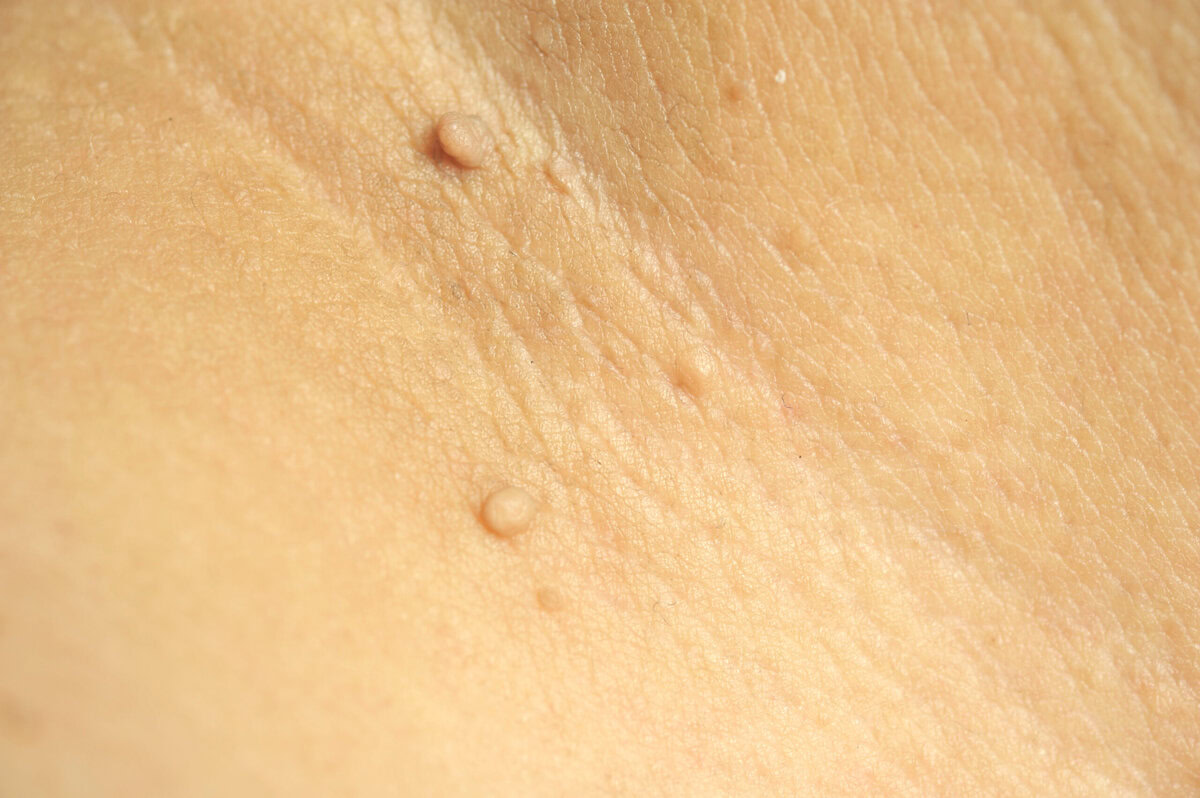
A fibroma (often referred to as a skin tag or soft skin growth) is a benign growth of connective tissue. These skin growths are completely harmless from a medical standpoint and are not contagious; however, they are often considered bothersome, either for aesthetic reasons or because they rub against clothing and jewelry.
Important to know: A so-called “soft fibroma” is not a true wart (which is caused by a virus), but rather a simple overgrowth of connective tissue.
In general, skin tags can appear almost anywhere on the body. They are particularly common in skin folds or in areas subject to friction:
- Face & Eyelids: Skin tags in these areas can often be a cosmetic nuisance in everyday life or when applying makeup. The delicate eyelid area requires the utmost precision.
- Neck & Decolletage: Friction from necklaces or collars often leads to inflammation or bleeding of the fibroma.
- Mouth & Tongue: Connective tissue growths (irritation fibromas) can also develop in the oral cavity as a result of repeatedly biting the inside of the mouth.
Armpits & Genital Area: These are typical areas where multiple small skin tags can form due to skin-on-skin friction.
What types of fibroids are there?
Medically, we classify connective tissue growths primarily into two types, which differ in their structure, shape, and typical location on the body:
Soft Fibroma (Fibroma molle)
This type is the most common form of skin tag and is often colloquially referred to as a “stalked wart. “ It is characterized by its narrow base, from which the fibroma protrudes like a stalk above the skin’s surface (fibroma pendulum).
- Appearance: Skin-colored to slightly brownish, ranging in size from a few millimeters to several centimeters.
- Common locations: Mainly in skin folds or areas subject to friction, such as the eyelids, neck, nape of the neck, and the underarm and groin areas. They appear in many people starting in middle age.
Hard Fibroma (Fibroma durum)
Unlike the soft type, the hard fibroma develops in the deeper layers of the skin. As a result, it feels firm and usually forms a flat, only slightly raised nodular structure.
- Appearance: The color ranges from pale pink to skin tones to darker shades of brown.
- Common locations: They tend to appear on the legs and arms and often develop in response to minor injuries or insect bites.
Fibroma Removal in Frankfurt
The removal of fibromas (skin tags) is a quick, routine procedure that we perform on an outpatient basis at our Frankfurt practice. Depending on the size, type, and location of the fibroma, we select the most appropriate method to achieve an aesthetically pleasing result:
- Surgical removal: Larger skin tags or irritant fibromas (e.g., in areas subject to significant mechanical stress, such as the neck or armpits) are removed precisely and painlessly under local anesthesia.
- Gentle Laser Therapy: Our team relies on high-precision lasers, especially for treatments on the face, eyelids, and décolletage. The tissue is gently and bloodlessly removed, without any stitches and with an extremely low risk of scarring.
Can you remove fibroids on your own?
From a medical standpoint, we strongly advise against cutting off or tying off skin tags yourself. This often leads to painful inflammation, infections, and unsightly scars.
Why You Should Avoid It
Risk of Infection and Inflammation
Skin tags are highly vascularized. Improperly cutting or tying them off opens the deep tissue layers to bacteria, which can lead to painful inflammation.
Unattractive scarring
Procedures performed by untrained individuals often result in irregular, dark pigmentation or visible scars that are more cosmetically bothersome than the original fibroma.
Risk of Misdiagnosis
Not every skin lesion that looks like a stalked wart is actually one. Before any removal, a specialist should examine the lesion to determine whether it might be another type of skin lesion that requires further evaluation.
Would you like to have unsightly skin growths removed professionally and safely?
Schedule a consultation now at our dermatology practice in Frankfurt.